Free Nationwide Delivery*
 Split Packs Availible
 Price Match
 Trade Accounts

Black Limestone Paving: Wet & Dry Colour, Scuff Marks and Sealing
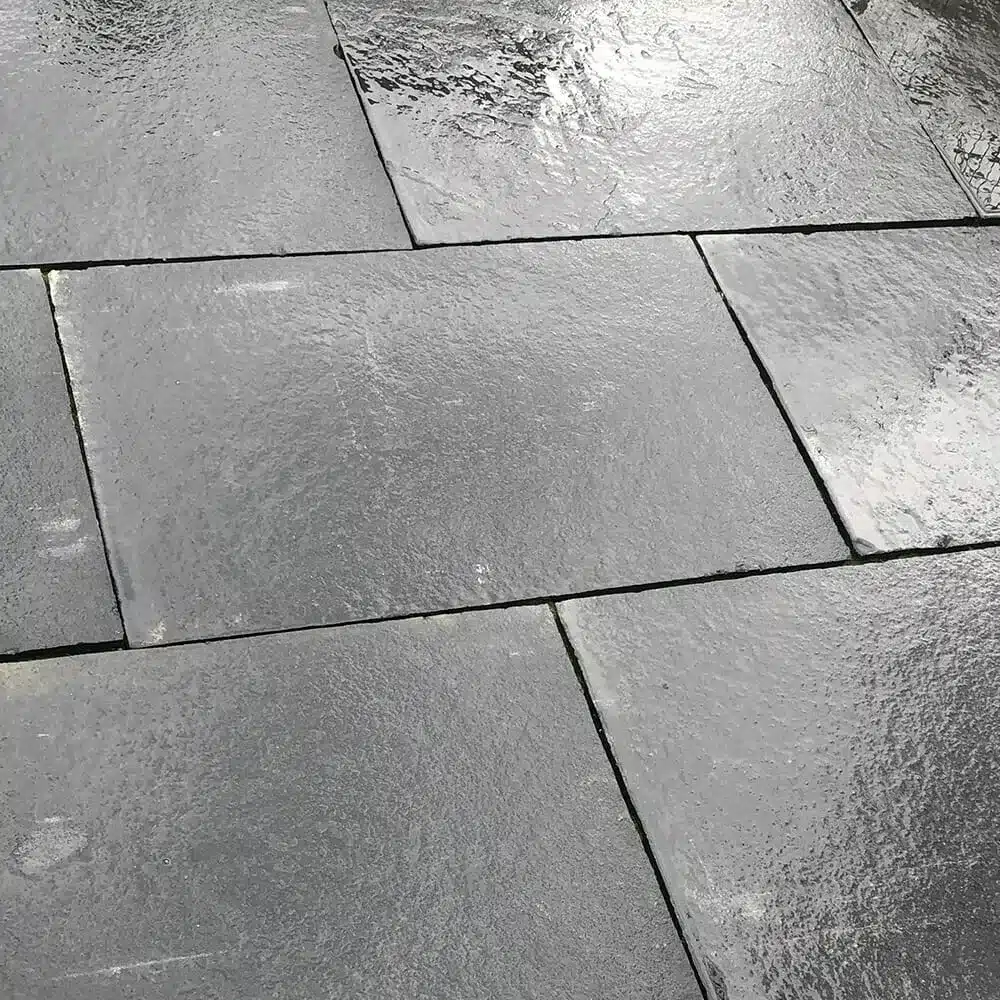
Black Indian limestone makes a striking patio, with deep charcoal tones that complement planting, brickwork and modern garden design. Its colour changes noticeably with moisture, so knowing what to expect before ordering is particularly helpful.
Why does black limestone look grey when dry?
In its natural, unsealed state, black limestone is usually a very dark charcoal grey when dry. When wet, it becomes a rich, deep jet black. This is normal for the material, not a sign that the wrong colour has been supplied.
Light, viewing angle and natural variation also influence how different slabs look. Always judge samples both dry and damp if maintaining a dark-black appearance is important to you.
How can you keep the black appearance?
A specialist black limestone colour-enhancing sealer is the best choice if you want to maintain more of that richer, wet-look colour when the slabs are dry. Select a product made for black limestone, check the intended finish and test a spare slab or inconspicuous area first.
Natural weathering can lighten untreated stone over time. An enhancer helps with colour appearance and may improve resistance to staining, but it cannot permanently stop weathering; follow the maker’s cleaning and reapplication guidance.
Why does new black limestone sometimes look scratched?
Customers occasionally spot pale or whitish lines when unpacking new black limestone. Neighbouring slabs can rub together during packing and transport, producing surface scuffs that resemble white scratches. On dark dry stone these can look more dramatic than they really are.
Slabs can rub together in packing and leave pale surface scuffs, but a persistent white line or deeper scratch may have another cause. Begin with the supplier’s recommended limestone-compatible cleaning method, test an inconspicuous area and avoid acid-based products. Pressure washing is only appropriate where the paving, joints and any sealer allow it. Send us photographs before laying if you are unsure about a mark.
What does the surface feel like?
Natural-finish limestone is relatively flat overall but textured, with occasional riven areas and fine irregularities. Slip performance depends on the actual product, finish and conditions, so check suitability for the intended area and keep the paving clean. A combined honed-and-brushed finish is softer to the touch, while retaining some texture; check a particular product’s suitability for outdoor conditions.
Will corners and markings be perfect?
No two slabs are identical. Natural veining and fracture-like lines are normal characteristics of limestone rather than automatically faults. Hand-cut edges can be gently irregular, and small corner chips often blend into the jointed, rustic appearance of the finished patio.
How do you clean and protect black limestone?
Keep leaves, soil and algae from building up, use limestone-compatible cleaners and avoid acids such as vinegar or brick acid. Sealing is optional, but for customers who want consistently dark colouring it is particularly worth considering.
Black limestone paving, cobbles and circles
Alongside black limestone paving slabs, you can explore black limestone cobble setts in different sizes and black limestone paving circles for circular patio features. Availability varies by product.
For colour care, see our PaveCare Black Limestone Restorer and Sealer and the full sealers and enhancers collection; always check the product instructions.
Is black limestone right for your patio?
Choose black limestone for its dramatic contrast and natural character, remembering that a dry unsealed patio will not look identical to wet paving. Order a sample and compare the dry and wet colours before committing.
Explore our complete Indian limestone paving guide for edge finishes, natural fracture lines and driveway considerations. You can also browse black limestone products or ask the Natural Paving Store team for advice.
Compare a sample dry and damp
Look at the same sample outdoors when dry and again when damp. This helps separate the effect of moisture from changes in lighting or differences between individual stones.
| Condition | Typical appearance | What it means when choosing |
|---|---|---|
| Dry, unenhanced stone | Often charcoal rather than a uniform jet black. | Judge this everyday appearance as well as wet photographs. |
| Damp stone | Often deeper and darker, with light reflected from moisture. | The darker effect is temporary as the surface dries. |
| Colour-enhancing treatment | The result depends on the product, stone and application. | Test first and follow the sealer’s technical data sheet. |