
 Free Nationwide Delivery*
 Split Packs Availible
 Price Match
 Trade Accounts

What Are the Most Popular Paving Slab Sizes in the UK?
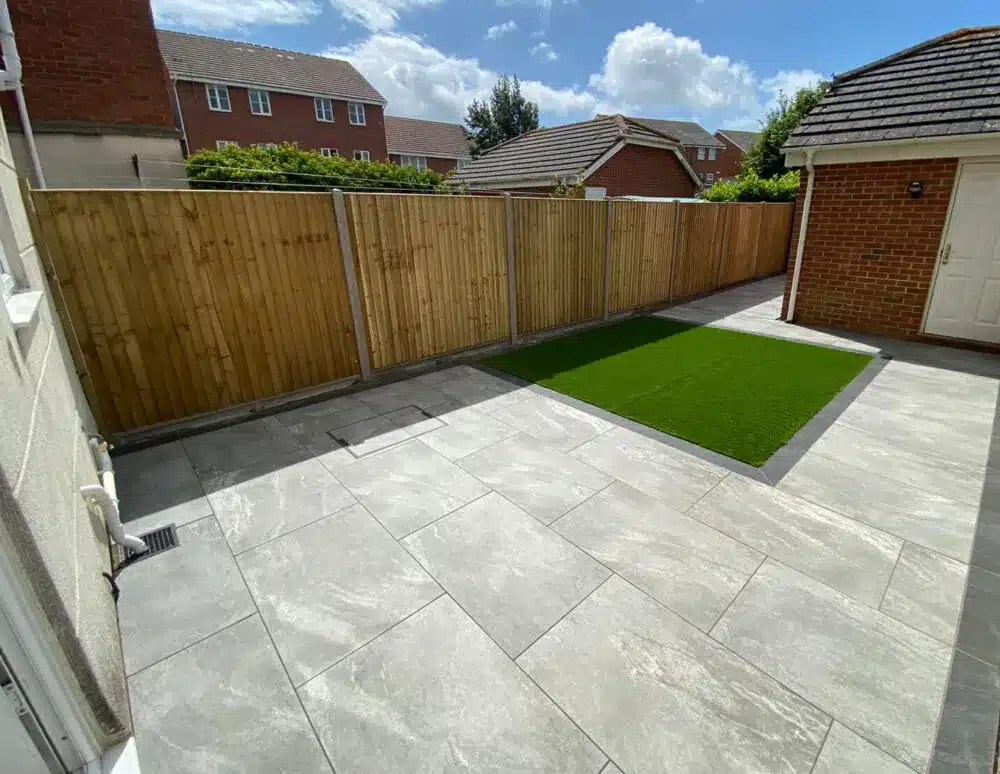
Choosing a paving colour is only half the decision. The size of each slab changes the number of joints, the amount of cutting, the appearance of the patio and how easy the material is to handle.
Across UK garden paving ranges, 600 × 900 mm, 600 × 600 mm and mixed-size patio packs are familiar formats, with 1200 × 600 mm also a popular design option in contemporary porcelain. There is no independent, industry-wide sales ranking for every paving slab size, so these are common market choices rather than a claim about exact UK sales percentages.
Here is how to compare them for your garden, including coverage calculations and relevant natural stone paving and porcelain paving ranges from Natural Paving Store.
UK paving slab sizes at a glance
| Slab size | Area per slab | Often chosen for |
|---|---|---|
| 600 × 900 mm | 0.54 m² | Modern patios, walkways, straightforward layouts |
| 600 × 600 mm | 0.36 m² | Square grid patterns and smaller garden areas |
| 1200 × 600 mm | 0.72 m² | Large-format contemporary terraces |
| 600 × 300 mm | 0.18 m² | Mixed-size natural stone patio patterns |
| 300 × 300 mm | 0.09 m² | Smaller modules within selected patio packs |
These areas are calculated from nominal dimensions. Finished installed coverage can change slightly with the specified joint widths. Always check the actual size and pack coverage shown on the product you intend to order.
600 × 900 mm paving slabs: versatile rectangles
The 600 × 900 mm format is a natural starting point for many UK patios. It works with stretcher-bond and other simple offset layouts, while the broad face shows off the pattern and variation in porcelain or sandstone without an overwhelming number of joints.
A nominal 600 × 900 mm slab covers 0.54 m² before joints. Forty slabs therefore have a true face area of 21.6 m². You may also see a pack described as covering approximately 22 m² laid, depending on the joint allowance. For ordering and quantity calculations, use the exact pack specification on the product page.
Compare 600 × 900 mm porcelain paving slabs and 600 × 900 mm Indian sandstone paving.
600 × 600 mm slabs: square and balanced
Square paving creates a clean, regular pattern and can look especially effective in a smaller outdoor dining area or a compact garden. Each 600 × 600 mm slab covers 0.36 m² before joints, so a given patio generally contains more individual pieces than if you use 600 × 900 mm slabs.
Stack bond is a natural choice for this format, although staggered layouts are possible. The straight joint lines require careful setting-out. Explore 600 × 600 mm porcelain paving or read our existing 600 × 600 versus 600 × 900 comparison for a closer look at those two sizes.
1200 × 600 mm slabs: a larger contemporary format
At 0.72 m² per slab before joints, 1200 × 600 mm paving creates broad stretches of stone-effect or modern porcelain with fewer visible joints. The look works particularly well on open terraces, but the larger individual tiles are heavier and more demanding to handle, set out and bed accurately.
Check access, lifting arrangements, edge cuts and the product’s recommended laying pattern. For a particularly narrow side passage or a space with lots of angles, a smaller format may be easier to work with. Browse our 1200 × 600 mm porcelain paving.
Mixed-size patio packs: traditional natural stone layouts
Mixed-size paving packs are designed to give patios more variation. They are especially familiar in Indian sandstone paving. Depending on the supplier and range, a patio pack may contain a combination such as 900 × 600 mm, 600 × 600 mm, 600 × 300 mm and 300 × 300 mm, but pack contents are not universal. Some products use different modules or quantities.
The advantage is a more informal appearance. The trade-off is that you must plan the layout carefully, distribute the supplied sizes and allow for cuts. For inspiration, our paving slab laying patterns guide covers broader patio design ideas; this new guide’s companion article will focus specifically on arranging different slab sizes.
Compare our mixed-size sandstone packs and mixed-size porcelain paving. Some mixed-size porcelain ranges are sold as complete packs only, so check whether part packs are available before planning a smaller area.
What paving slab size suits your garden?
For a small patio
600 × 600 mm can look calm and proportionate. Rectangular 600 × 900 mm slabs can also work well, particularly if the rows are orientated to guide the eye. Draw the space with its furniture and edge cuts before deciding.
For a large, modern terrace
600 × 900 mm and 1200 × 600 mm are useful starting points. They allow broad paved areas with comparatively few joints, but larger units demand careful handling and a well-prepared full bedding layer.
For a cottage garden or traditional property
A mixed-size natural stone pack creates a less regimented finish and can complement planting, brickwork and curving borders. Browse our sandstone colour and finish guide to compare options.
For a path with decorative edging
Consider matching the main slabs with smaller cobble setts along the edges. Both 100 × 100 mm setts and 200 × 100 mm setts can provide a contrasting scale.
How many paving slabs do you need?
Measure the finished paved area in metres and multiply length by width. Divide the area by the face area of each slab for a preliminary calculation, then adjust for the supplier’s actual pack coverage and the jointing system.
For example, a 5.4 m² area is equivalent to 10 nominal 600 × 900 mm slabs before allowing for joints and cutting. Order sufficient extra material: around 10% is a common starting allowance for waste and cuts, while complex layouts or selected limestone installations may justify more. See our waste and damages information before ordering.
Slab size alone does not tell you how much a completed patio will cost. Consider the product, required base preparation, cutting, jointing, access, weight and labour. Our paving installation guide covers essential preparation, primer and full mortar bedding.
Frequently asked questions
Is 600 × 900 mm the most popular paving size?
It is one of the most widely stocked and recognisable contemporary formats, but we would not present it as the UK’s number-one seller without comprehensive national sales data. The right choice is the size that suits your layout and product range.
Are bigger paving slabs always better?
No. Larger slabs reduce the number of individual units and some joints, but they are harder to move and may require more cutting in an irregular space. A well-designed 600 × 600 mm or mixed-size patio can be every bit as attractive.
Can I mix different paving slab sizes myself?
Yes, when the dimensions, material, finish and thickness are compatible. Check the manufacturer’s pattern guidance and planned joint widths. A purpose-made mixed-size pack makes it easier to obtain a balanced assortment.
Compare before you order: Explore porcelain paving by size, natural Indian sandstone and mixed-size patio packs, or contact our Hampshire team for help planning your quantity.

