Natural Paving Store ยท Help Centre

Types of paving slabs: compare materials for your garden

Compare the main types of paving slabs in our range: porcelain, Indian sandstone, limestone, granite and slate. See how they differ in appearance, natural variation and care, then explore each range to check sizes, finishes and product specifications.

Start with how you want the space to look and feel

Think about the style of your garden, how much natural variation you like and the maintenance you are comfortable with. Porcelain usually gives a more consistent finish; natural stone has individual colour and texture changes from slab to slab. For any particular use, check the specification and installation guidance for the exact product.

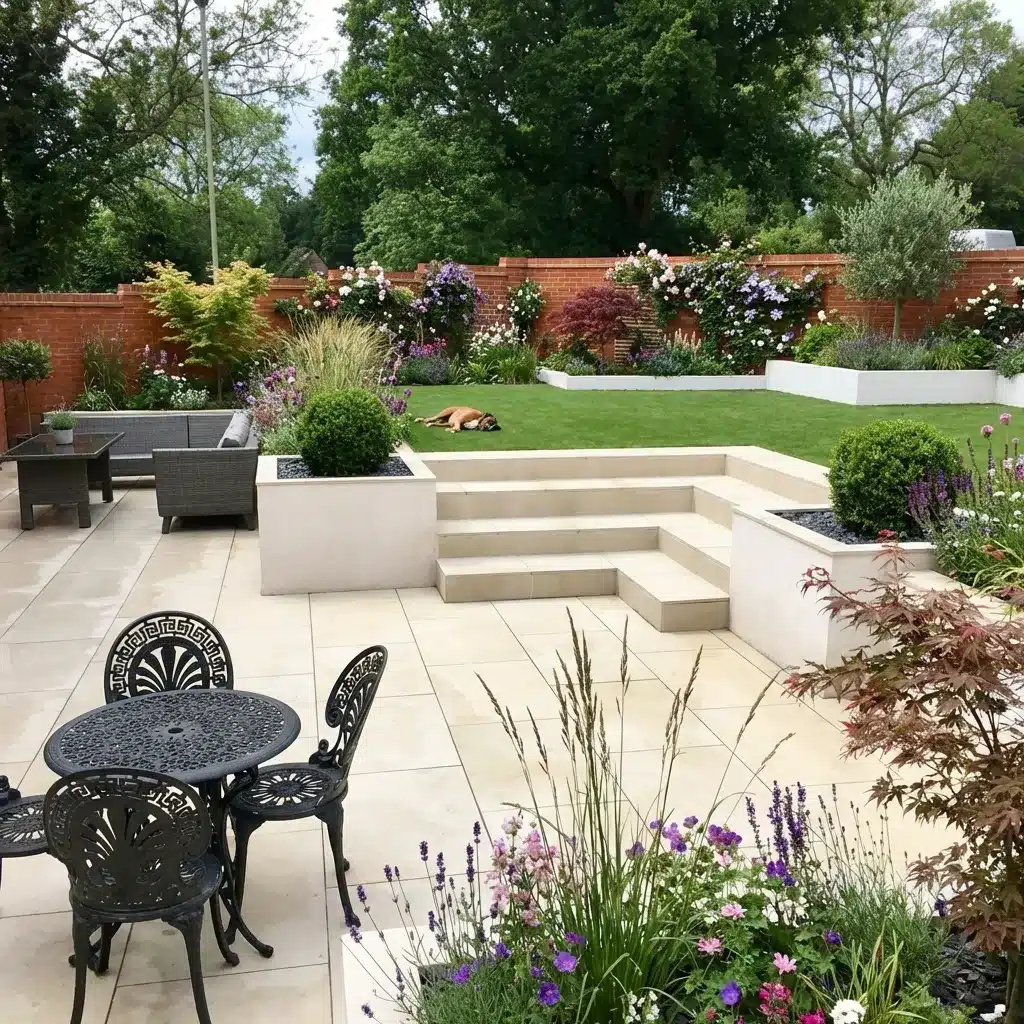
HS Beige porcelain paving slabs

Consistent finish

Porcelain paving

Porcelain paving has a consistent colour and pattern, with a low-porosity surface that is straightforward to keep clean. It comes in different colours, sizes and finishes; check the product specification and care guidance for the option you choose.
Explore porcelain paving slabs

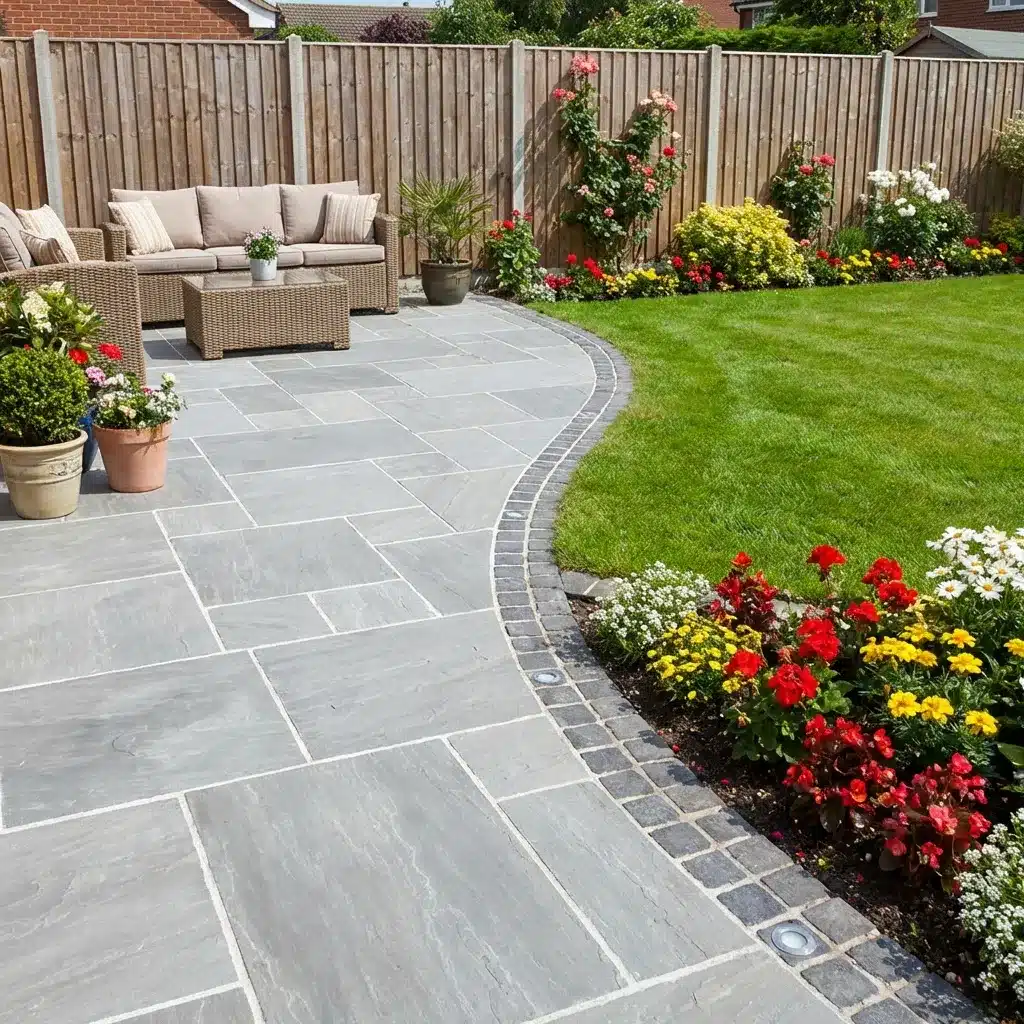
Kandla Grey Indian sandstone paving

Natural colour movement

Indian sandstone

Indian sandstone is a natural stone with variation in shade, veining and texture. Colours range from greys to buff and warmer tones; compare samples because each slab is individual.

Explore Indian sandstone slabs

Egyptian limestone natural stone paving

Fine natural texture

Limestone paving

Limestone often has a finer, more even appearance than sandstone, while retaining natural tonal changes and markings. The finish and colour vary by range, so check the product details before choosing.

Explore limestone paving slabs

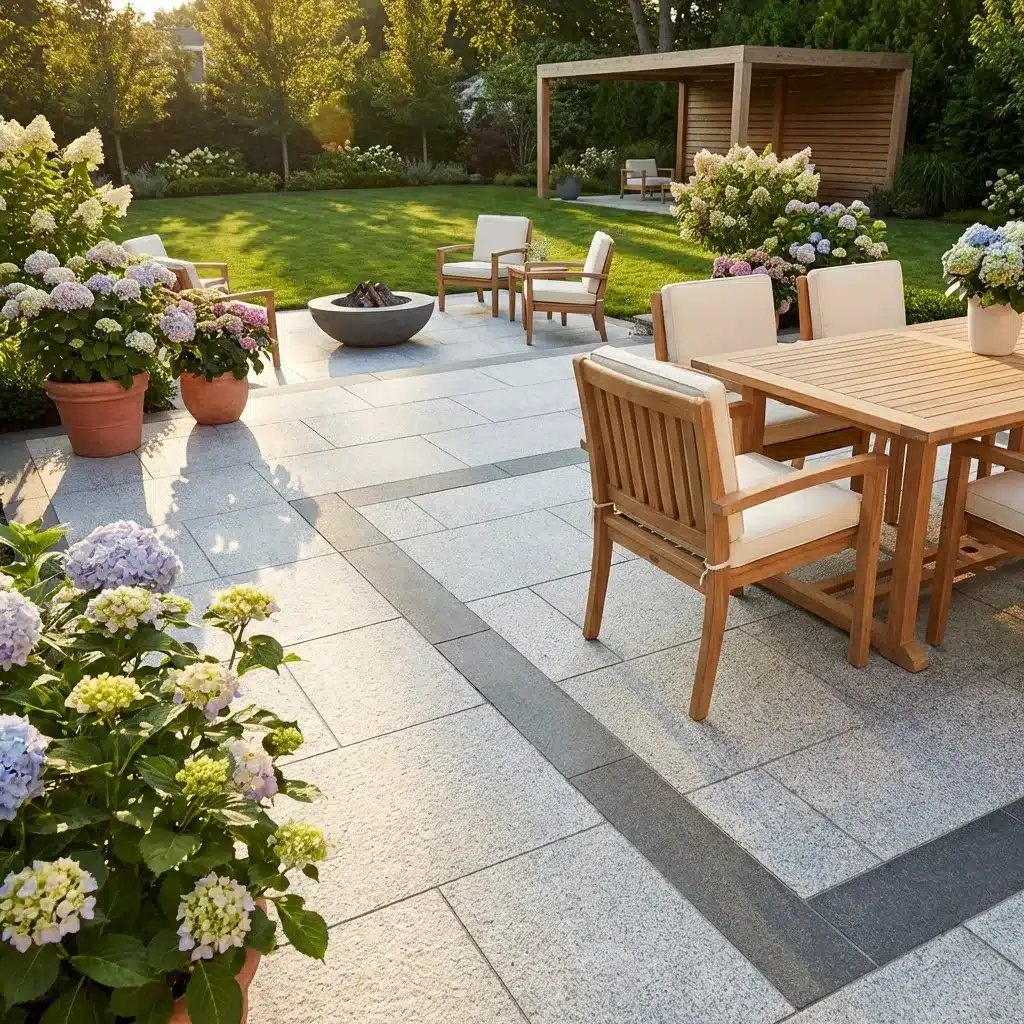
Silver grey granite natural stone paving

Dense and hard-wearing

Granite paving

Granite is a dense natural stone with a granular surface and often more consistent colouring than other stone. Surface finish and product specification matter, so check that the range suits the intended area.

Explore granite paving slabs

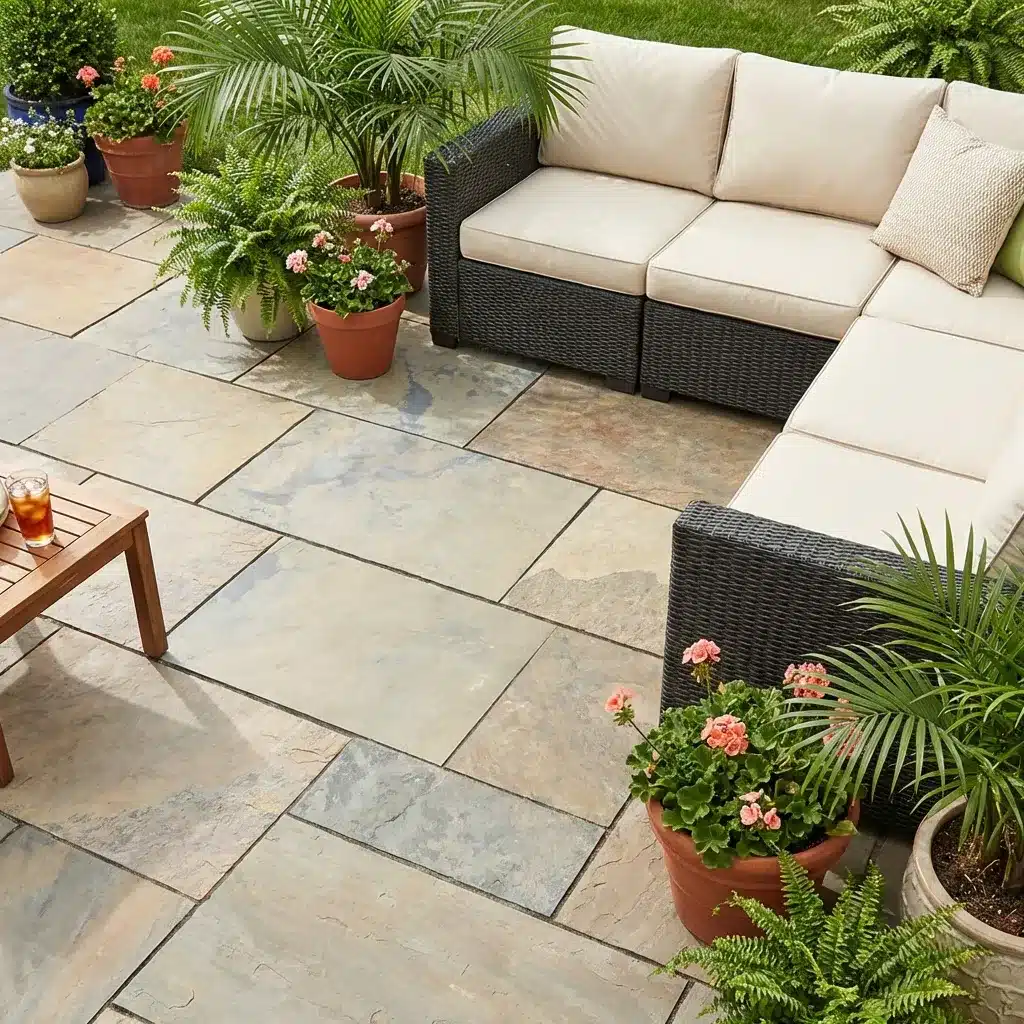
Copper slate paving with natural colour variation

Layered surface character

Slate paving

Slate has a layered, riven surface, with options from blue-black to warm copper tones. Natural shade and surface differences are part of its character; review the productโ€™s care guidance.

Explore slate paving slabs

A natural material

Expect natural variation

Natural stone is quarried, so colour, veining and texture can vary between slabs and batches. The stone may also weather over time. View samples in your own garden light and order the full requirement together where possible for the closest batch match.

Before you order

  • Check the dimensions, thickness and finish on the product page.
  • Allow for cuts and selection when working out the quantity.
  • Follow the productโ€™s installation and care guidance.

Frequently asked questions about paving slabs

What are the main types of paving slabs?

Our range includes porcelain and natural stone paving. Natural stone options include Indian sandstone, limestone, granite and slate, each with its own appearance, variation and care requirements.

Which paving is easiest to maintain?

Porcelain is often chosen for its consistent, low-porosity surface. All paving needs suitable cleaning and care, so follow the guidance for the exact product you buy.

Do natural stone paving slabs all look the same?

No. Shade, veining and texture can vary between slabs and batches. Viewing a sample in your garden and ordering the full requirement together can help you judge the look before laying.

Can any paving slabs be used on a driveway?

Suitability depends on the specific product, thickness, base and installation method. Check the product specification and get advice from your installer before choosing paving for a driveway.

Helpful next steps

Explore paving slabs and compare materials before choosing the colour, finish and format for your garden.

Plan your layout with our guide to choosing paving slab sizes, or explore patio paving ideas, layouts and finishing touches.

Once you have chosen a material, use our practical guides to plan the work and understand common paving terms.

Read the installation guide
Read the paving terminology guide