Free Nationwide Delivery*
 Split Packs Availible
 Price Match
 Trade Accounts

Tandur Yellow Limestone Paving: Yellow & Grey Colour Guide
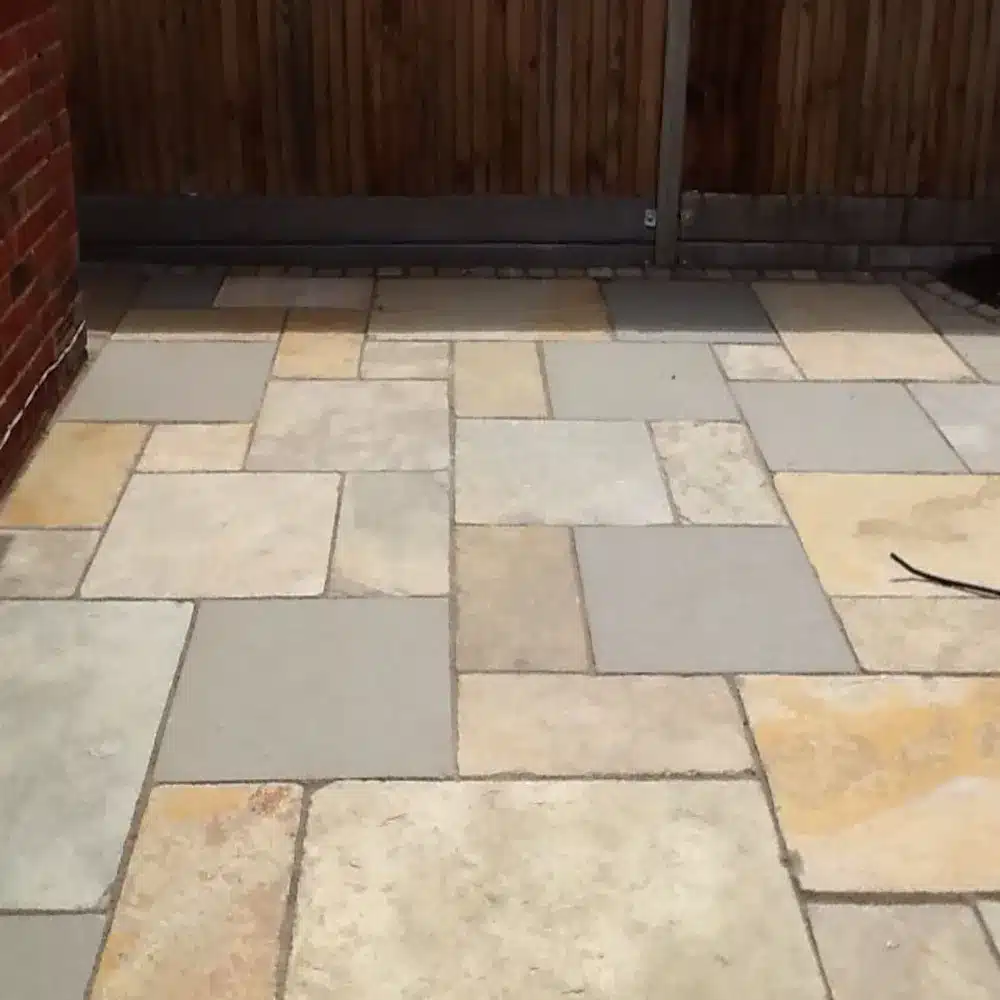
Tandur Yellow limestone offers a warm, traditional look for patios and pathways, but its most important characteristic is that it is not uniformly yellow. The natural mix of warm shades and cooler greys is central to its appeal.
Does Tandur Yellow limestone contain grey?
Expect yellow, buff, cream and honey colours alongside varying shades of grey. Some slabs are predominantly golden while others may have much stronger grey areas. This is normal natural variation, not a colour inconsistency to be corrected.
Customers choosing this stone should expect a finished patio with both warm and cooler tones. A single sample can demonstrate the texture, but several stones or images of a larger laid area help show the full colour mixture.
What does its natural surface feel like?
Natural-finish Tandur Yellow limestone is predominantly flat and distinctly textured, with shallow ridges, occasional riven sections and small uneven areas. The split texture gives the stone character. Check the particular product’s finish and outdoor suitability, and keep the surface clean because moisture and algae can affect footing.
What is honed and brushed limestone?
A combined honed-and-brushed finish uses machinery to create a softer, more even feel while retaining some texture. It is often seen in interior flooring but is also available in products made for outdoor use. The natural split finish remains an excellent traditional patio option.
Hand-cut or sawn-edge Tandur Yellow?
Hand-cut edges are manually dressed with a chisel and have a slightly uneven, rustic profile. Sawn edges are machine cut and straighter. Both can complement the mix of yellow and grey tones. The edge finish should not be confused with how the face of the stone is finished.
Are the visible lines and variations faults?
Limestone can display natural veins and colour lines, but an open crack or a line affecting the slab’s integrity needs separate assessment. Do not dismiss every crack-like line as a natural feature. If you are unsure, photograph it and ask us before installation. Minor hand-cut edge variation is different from substantial physical damage.
How does Tandur Yellow work in a garden?
It suits traditional gardens, country-style patios, older brickwork and planting schemes where a warm natural material is welcome. Grey shades within the stone can help connect it visually to cooler materials, such as grey edging or garden walls.
Mix paving from different packs during installation so yellows, buffs and greys are naturally distributed rather than concentrated into separate patches.
Should Tandur Yellow be sealed?
Sealing is optional. A limestone-compatible sealer can help reduce staining and make cleaning easier. A colour-enhancing version can enrich the warm and grey tones, but test it first to make sure you like the result. Avoid acidic cleaning products.
Tandur Yellow paving, cobble setts and circles
See the yellow limestone paving collection, plus yellow limestone cobble setts in various sizes and finishes for edging, paths and complementary designs. Yellow limestone is also available in circular paving features; check stock and size options before ordering.
To protect the paving or enrich its yellow and grey tones, browse our paving sealers and enhancers and select a limestone-compatible product.
Before choosing Tandur Yellow
If you want a patio with a naturally varied mix of gold, cream and grey rather than identical yellow slabs, Tandur Yellow is well worth considering. For more on limestone surface texture, durability and driveway use, see our main Indian limestone paving guide. Browse samples and speak to the Natural Paving Store support team if you need practical advice.
Plan for the full mix of yellow and grey
The patio photograph above shows why several laid slabs are more informative than one small colour sample. Plan the layout around the complete mixture of warm yellow, buff, cream and cooler grey, rather than selecting only the yellowest pieces.
Compare paving samples, then check the finish, dimensions and pack coverage of the current limestone paving products. Availability varies between sizes and finishes.