Free Nationwide Delivery*
 Split Packs Availible
 Price Match
 Trade Accounts

How to Cut Paving Slabs: Choosing Tools & Methods
Choosing a paving-cutting method
The best way to cut paving slabs depends on the material, slab thickness, shape of the cut and finish you need. A technique that suits a small adjustment to suitable concrete paving may be unsuitable for a 20 mm porcelain slab.
Use this overview to choose a method, then follow the material and equipment manufacturer’s instructions. The links below lead to our more detailed guides.
Match the tool and blade to the paving
Begin with the paving specification and the cut you need. Check that the machine, blade type, blade diameter, bore, speed rating and cutting depth are compatible with each other and with the material.
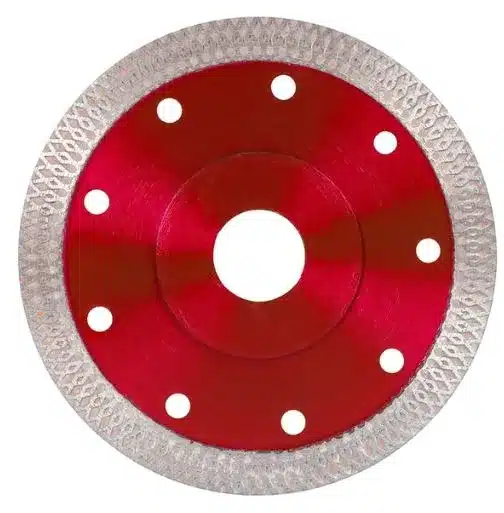
A blade described for masonry is not automatically suitable for porcelain. Our porcelain cutting-blade listings explain the available options; match the chosen blade to your machine before ordering.
Compare the main cutting methods
| Method | When to consider it | Read next |
|---|---|---|
| Hand splitting | Small adjustments to material confirmed suitable for splitting; a rustic edge may remain. | Cutting slabs by hand |
| Suitable powered saw | Repeated straight cuts where the machine and blade suit the material and thickness. | Saw and power-tool preparation |
| Angle grinder | Some trims, notches or shaped cuts with a compatible set-up and a competent operator. | Cutting porcelain with a grinder |
| Mechanical splitter | Products approved for splitting; not a substitute for a porcelain-cutting saw. | Check the paving supplier’s instructions. |
Material-Specific Cutting Tips
Porcelain
Use a blade and cutting system designed for porcelain of the chosen thickness. Supported cutting helps reduce vibration and breakages. For straight cuts, a suitable water-fed table saw is often a useful option.
Sandstone and limestone
Natural texture, edge style and thickness influence the cut and the appearance of the finished edge. Check whether the specific product can be split or needs a saw.
Granite
Match the equipment and blade to a dense stone and the required cutting depth. Do not assume the tool used on a thinner slab will suit a thicker sett.
Slate
Its layered structure needs careful handling and support. A naturally split face does not mean every cut can be made by hand.
Preparation and dust control
Set out the pattern before committing to cuts, check measurements and allow for the joint width. Support the material properly and practise on a spare piece. Allow time for dressing visible cut edges.
Cutting paving can release silica dust. Use suitable dust controls and respiratory protection, following the equipment instructions and HSE guidance on cutting paving.
Use water only with equipment designed for wet cutting. Follow the tool manufacturer’s instructions for dust extraction or water suppression; do not improvise a water feed on an ordinary electric grinder.
Find the guide for your project
Choose the material and method together. Read the manual-cutting guide, power-tool guide or porcelain grinder guide for your task.
For help choosing the paving itself, compare our porcelain paving slabs and natural stone paving slabs.